Complaints Procedure for Office Clearance Osterley
 This Complaints Procedure outlines how concerns are handled in relation to office clearance and commercial waste removal services. It applies to all matters associated with office clearance Osterley, including rubbish collection, removal of furniture, recycling sorting and any service-related complaints. The aim is to provide a clear, prompt and fair mechanism so that issues are documented, investigated and resolved with minimal disruption to clients and property. The process emphasises transparency, respect for property and lawful disposal of waste.
Scope: The procedure covers complaints about service standards, delayed or missed collections, improper disposal, failure to follow agreed waste segregation, and any damage or safety issues that occur during a clearance. It does not cover matters that are outside the remit of the clearance operator, such as disputes between third parties or pre-existing building defects. All allegations are treated seriously and will be assessed for potential health, environmental and legal implications.
 How to raise a complaint: Complainants should provide a concise account of the concern, including the date of the clearance operation, a description of the issue and any relevant photographs or documentation. Although contact details are required to acknowledge receipt and to communicate outcomes, this page does not publish or collect those details publicly. Complaints are logged on receipt, assigned a reference and an initial response is provided within a set timescale to confirm next steps and the expected timeframe for a full investigation.
The acknowledgment stage: Every complaint receives an acknowledgement that confirms it has been recorded. This acknowledgement includes the complaint reference, an outline of the investigation process and an estimated timeframe for a substantive response. Investigations vary in complexity; typical enquiries are aimed to be closed within 10–20 working days, though extended enquiries are advised of revised timelines. The organisation handling office waste clearance ensures impartiality during investigation and keeps a clear record of communications and findings.
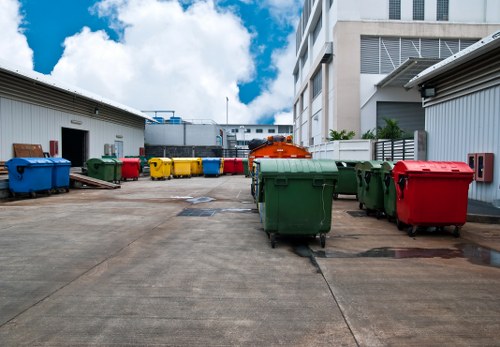 Investigation and evidence gathering: A thorough review is undertaken which may include site inspection notes, collection logs, vehicle manifests and statements from staff involved in the job. Where appropriate, independent evidence such as third-party photos or waste transfer notes is reviewed. The objective is to establish the facts and, where fault is identified, determine corrective actions. All assessments are documented and stored in a secure complaints register for audit and continuous improvement purposes.
Resolution options and outcomes: Possible outcomes include an apology, remedial action, compensation where appropriate, operational changes to prevent recurrence and staff training. Where the complaint relates to environmental non-compliance or illegal disposal, the procedure includes escalation to regulatory authorities consistent with legal obligations. Resolutions are aimed at restoring client confidence and ensuring safe, compliant removal of office rubbish and commercial waste in future operations.
 Appeals and further review: If a complainant is dissatisfied with the outcome, they may request a formal review. The review is conducted by a senior, independent manager who was not involved in the original investigation. The review considers the original evidence, any new information presented by the complainant, and whether the initial response was proportionate. Final review decisions are documented and communicated in writing, with an explanation of the reasons for the decision and any corrective measures implemented.
The role of quality assurance and continual improvement: Complaints are treated as an important source of operational learning. Patterns and trends identified through complaints about office rubbish collection, workplace clearance or commercial waste services are analysed and used to update policies, training and standard operating procedures. Continuous improvement ensures that service delivery evolves to meet client expectations and regulatory requirements while minimising environmental impact.
 Record keeping and confidentiality: All complaint correspondence, investigation records and outcome statements are retained in accordance with data retention and privacy principles. Confidentiality is maintained throughout, with access limited to authorised personnel engaged in the investigation. Summarised records may be used internally to improve waste collection protocols, crew training and site safety without disclosing sensitive personal details.
Key Principles
Fairness: Every complaint is treated impartially and investigated without bias.
Timeliness: Acknowledgements and substantive replies are provided within published timeframes.
Proportionality: Remedies reflect the nature and severity of the issue.
What to expect from the process
- A clear complaint reference and timeline for progress updates.
- Objective investigation and evidence-based conclusions.
- Documented outcomes and, where relevant, practical remedies.
Note: This complaints procedure is intended to provide a structured response to concerns arising from office clearance services, office rubbish removal and related commercial waste operations. It is not a general advisory guide and does not replace statutory obligations or regulatory reporting where required. The procedure emphasises safety, compliance and professional resolution to protect both client premises and the environment.
Review cycle: The complaints procedure is reviewed periodically to ensure alignment with regulatory changes and evolving best practice in commercial clearance and waste management services.
